Walking Pad Electricity Cost in Kenya: Does It Use a Lot?
A typical walking pad treadmill uses roughly 0.15 to 0.35 kWh per hour of walking. At current Kenya Power domestic rates, that costs about KSh 4 to 9 per hour. An hour of daily use for a month costs between about KSh 120 and KSh 270, less than a matatu fare to a gym and back five days a week.
The maths
Kenya Power's standard household tariff (Category DC1) works out at around KSh 25 to 29 per kWh once you add the levies on every bill: fuel cost charge, forex adjustment, VAT and the inflation adjustment. We use KSh 27 per kWh as a round working figure. Check your latest bill for your exact rate, since KPLC adjusts these charges monthly.
A walking pad's power use depends on speed and your body weight. A reasonable range for home use:
| Activity | Power use | Cost per hour (at KSh 27/kWh) |
|---|---|---|
| Walking, handrail down, 3 to 4 km/h | About 0.15 kWh per hour | About KSh 4 |
| Brisk walking, 5 to 6 km/h | About 0.25 kWh per hour | About KSh 7 |
| Running, handrail up, 10 to 14 km/h | About 0.35 to 0.5 kWh per hour | About KSh 9 to 14 |
For comparison, a standard fridge uses roughly 1.0 to 1.5 kWh a day, and an electric kettle uses about 2 kWh per hour of boiling. An hour of running on the walking pad at full speed uses less power than an hour of kettle boiling.
What a normal month costs
If you walk 30 to 45 minutes a day at a moderate pace (handrail down, 4 to 5 km/h), that is about 0.1 to 0.15 kWh per session, or KSh 3 to 4 a day. Over 30 days, that comes to about KSh 90 to 120.
What it adds to your electricity bill
For most households, a walking pad adds about KSh 90 to 120 a month to the electricity bill, or to what you spend on prepaid tokens, for 30 to 45 minutes of walking a day. If two people in the house each walk for an hour a day, expect roughly KSh 250 to 500 a month.
The figure rises if you run often at high speed, or if a heavier person uses it for long sessions. It stays well below what an electric water heater, an iron or a kettle adds to a typical Kenyan bill.
How many watts does a walking pad use?
In normal walking use, a walking pad draws about 150 to 350 watts on average. The motor's rated power is higher, but it only pulls that much under heavy load, such as a fast run or a heavy user at top speed. That is why the cost per hour is so low.
How to keep the running cost down
- Lubricate the belt. A dry belt makes the motor work harder and use more power. Our lubrication guide shows how.
- Switch it off at the wall when you finish, rather than leaving the display on standby.
- Walk rather than run for most of your sessions. Walking uses about half the power of running.
How this compares with a gym
Electricity is the main running cost of a walking pad, and at under KSh 150 a month for daily use, it is small next to a Nairobi gym membership. See our walking pad vs gym membership cost comparison for the full payback maths, and our walking pad price guide for the total cost of owning one.
Frequently asked questions
Does a walking pad use a lot of electricity? No. At normal home-use speeds, it costs about KSh 4 to 9 per hour, a small fraction of what many household appliances use.
Will a walking pad increase my electricity bill? Only slightly. Walking 30 to 45 minutes a day adds about KSh 90 to 120 a month at Kenya Power household rates.
How many watts does a walking pad use? About 150 to 350 watts on average while walking. It draws more when running at high speed or carrying a heavier user.
Does running faster use more electricity? Yes. Running at 14 km/h with the handrail up uses more power than walking at 4 km/h. Even at top speed, an hour costs under KSh 15 at current tariffs.
Is a walking pad cheaper to run than going to a gym? Yes. Daily walking pad use costs under KSh 150 a month in electricity. Nairobi gym memberships typically cost KSh 3,000 to 8,000 a month, plus transport.
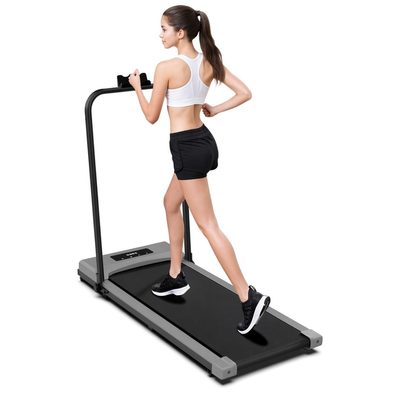
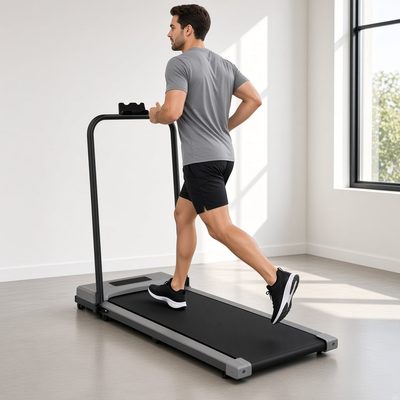
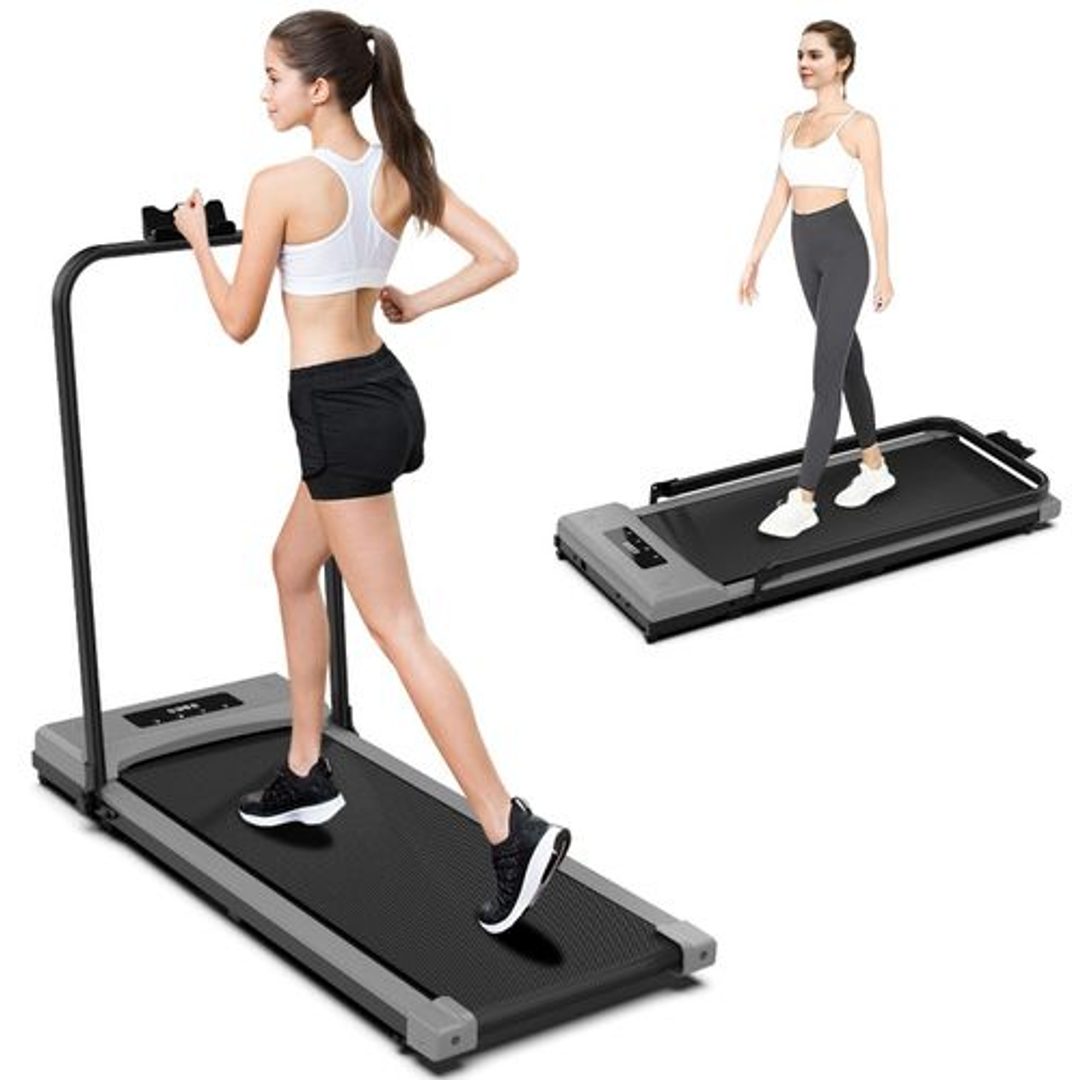
Looking for the machine itself? See our foldable walking pad treadmill, KSh 24,800.
Foldable Walking Pad Treadmill, KSh 24,800
Walks at 1 to 6 km/h under a desk and runs up to 14 km/h with the handrail up. Folds flat, no assembly. Delivered in 3 hours in Nairobi and to any town in Kenya.