How to Start a Walking Pad: A Step-by-Step Beginner's Guide
Starting a walking pad is simple. Unfold it on a flat floor, plug it in, stand on the side rails, start the belt at the lowest speed and step on. Then build up slowly over two weeks. Here is the full process for beginners.
Step 1: Choose your spot
Pick a flat, hard floor near a wall socket. Leave space behind the walking pad, and keep it clear of curtains, cables and furniture. If you live upstairs, put a rubber gym mat or thick rug underneath to reduce noise for your neighbours below. Our noise guide explains why this helps.
Step 2: Unfold and plug in
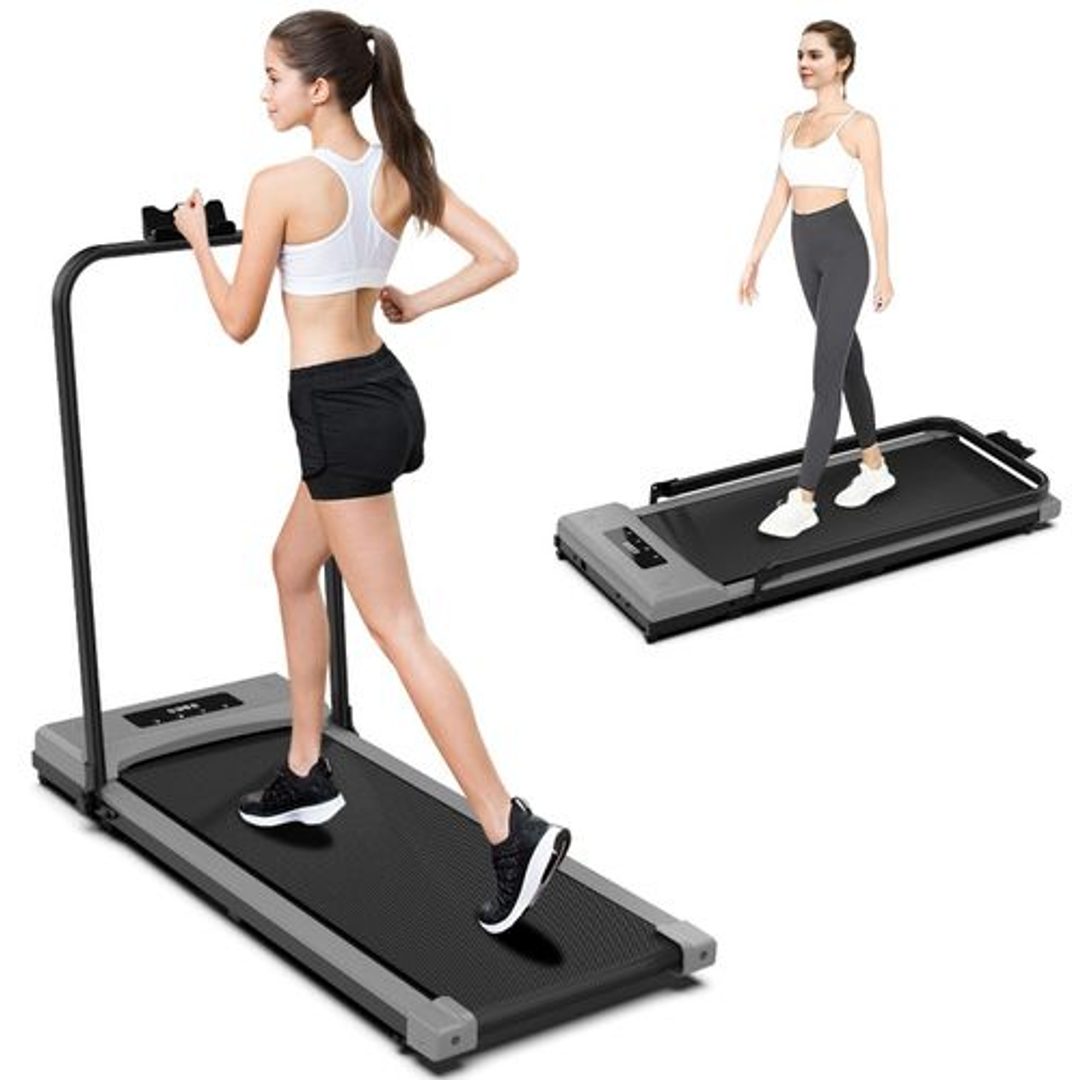
Our walking pad needs no assembly. Unfold it, attach the handrail if you want it up, and plug it into a standard Kenyan 3-pin socket. If the socket is far away, use a properly rated extension cable. A light-duty cable made for lamps or phone chargers is not suitable.
Step 3: Learn the controls before you walk
Find the start, stop and speed buttons on the remote and the handrail panel. Check what the LED display shows: speed, time, distance and calories. Know where the stop button is before you start walking.
Step 4: Take your first walk
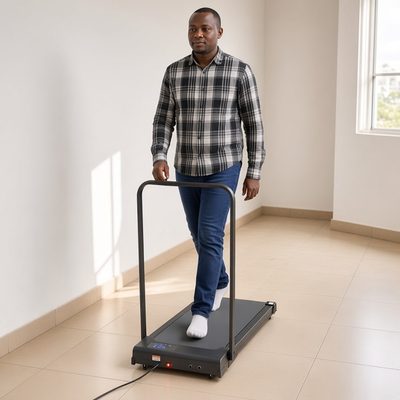
- Stand with your feet on the side rails, off the belt.
- Start the belt at the lowest speed, around 1 km/h.
- Hold the handrail and step onto the moving belt.
- Walk for 10 to 15 minutes at 1 to 3 km/h.
- Slow the belt down before you stop, then step off onto the side rails.
Walk in the middle of the belt, look ahead and wear closed shoes with grip.
Step 5: Follow a simple two-week plan
| Days | Sessions a day | Length | Speed |
|---|---|---|---|
| 1 to 3 | 1 | 10 to 15 minutes | 1 to 3 km/h |
| 4 to 7 | 2 | 15 to 20 minutes | 2.5 to 4 km/h |
| 8 to 14 | 2 to 3 | 20 to 30 minutes | 3 to 5 km/h, with a few minutes at 6 km/h |
Once that feels easy, you can aim for 8,000 to 10,000 steps a day, or lift the handrail and try short jogging intervals. See how long 10,000 steps takes on a walking pad.
Step 6: Walk while you work, if you want
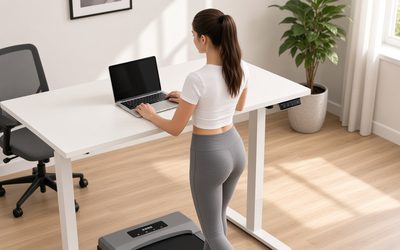
With the handrail down, the walking pad slides under a desk. Start at 1 to 2 km/h while typing and settle at 2.5 to 4 km/h. Our walking-while-working guide covers desk height and video calls.
Step 7: Look after it
- Fold it away and unplug it after each session, especially with children or pets at home.
- Wipe the belt and side rails with a dry or slightly damp cloth.
- Lubricate the belt every 2 to 3 months with daily use. Lubricant comes in the box. Our maintenance guide shows how.
Frequently asked questions
How do I start a walking pad for the first time? Plug it in, stand on the side rails, start the belt at the lowest speed and step on while holding the handrail. Walk for 10 to 15 minutes at 1 to 3 km/h.
What speed should a beginner walk at on a walking pad? Start at 1 to 2 km/h. Most beginners settle at 2.5 to 4 km/h within a week.
How long should a beginner walk on a walking pad? 10 to 15 minutes for the first few days. Build up to two or three sessions of 20 to 30 minutes by the end of the second week.
Do I need to assemble the walking pad? No. Ours comes ready to use. Unfold it and plug it in.
Is it safe to start if I have a health condition? Speak to your doctor first if you have a heart, balance or joint condition, or have not exercised for a long time. Our page on the walking pad for seniors covers starting safely.
Ready to start? See the foldable walking pad treadmill, KSh 24,800.
Foldable Walking Pad Treadmill, KSh 24,800
Walks at 1 to 6 km/h under a desk and runs up to 14 km/h with the handrail up. Folds flat, no assembly. Delivered in 3 hours in Nairobi and to any town in Kenya.