Are Walking Pads Safe? Risks, Who Should Avoid Them and Tips
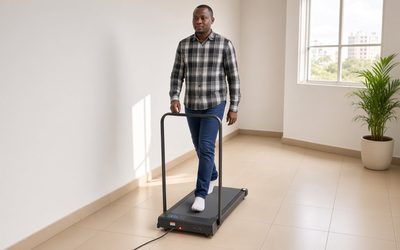
Yes, walking pads are safe for most healthy adults when you use them sensibly. The main risks come from a few avoidable situations: stepping onto a belt that is already moving fast, losing balance while looking at a phone, children or pets near a running belt, and overloaded extension cables. A walking pad also sits lower and usually runs slower than a full treadmill, so a stumble tends to be less serious.
Here are the risks in plain terms, who should check with a doctor first, and the habits that remove most of the danger.
The main risks of a walking pad
- Trips and stumbles. Most happen when getting on or off, turning around, or drifting to the edge of the belt while distracted.
- Children and pets. A moving belt can scrape skin or catch fingers, fur and loose clothing.
- Electrical problems. Thin extension cables and crowded multi-plugs can overheat under a motor's load.
- Doing too much too soon. Sore shins, blisters and tired knees usually come from long sessions in the first week.
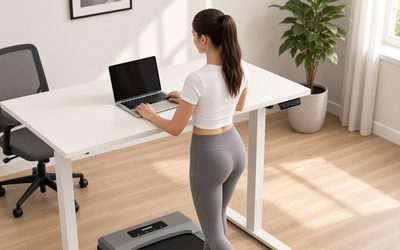
- Typing while walking fast. Your attention is on the screen, and your feet drift.
Are walking pads safer than treadmills?
In some ways, yes. A walking pad's deck sits only a few centimetres off the floor, so stepping off is easy. In walking mode the speed is low, 1 to 6 km/h on ours, and walking is far less likely to end in a fall than running.
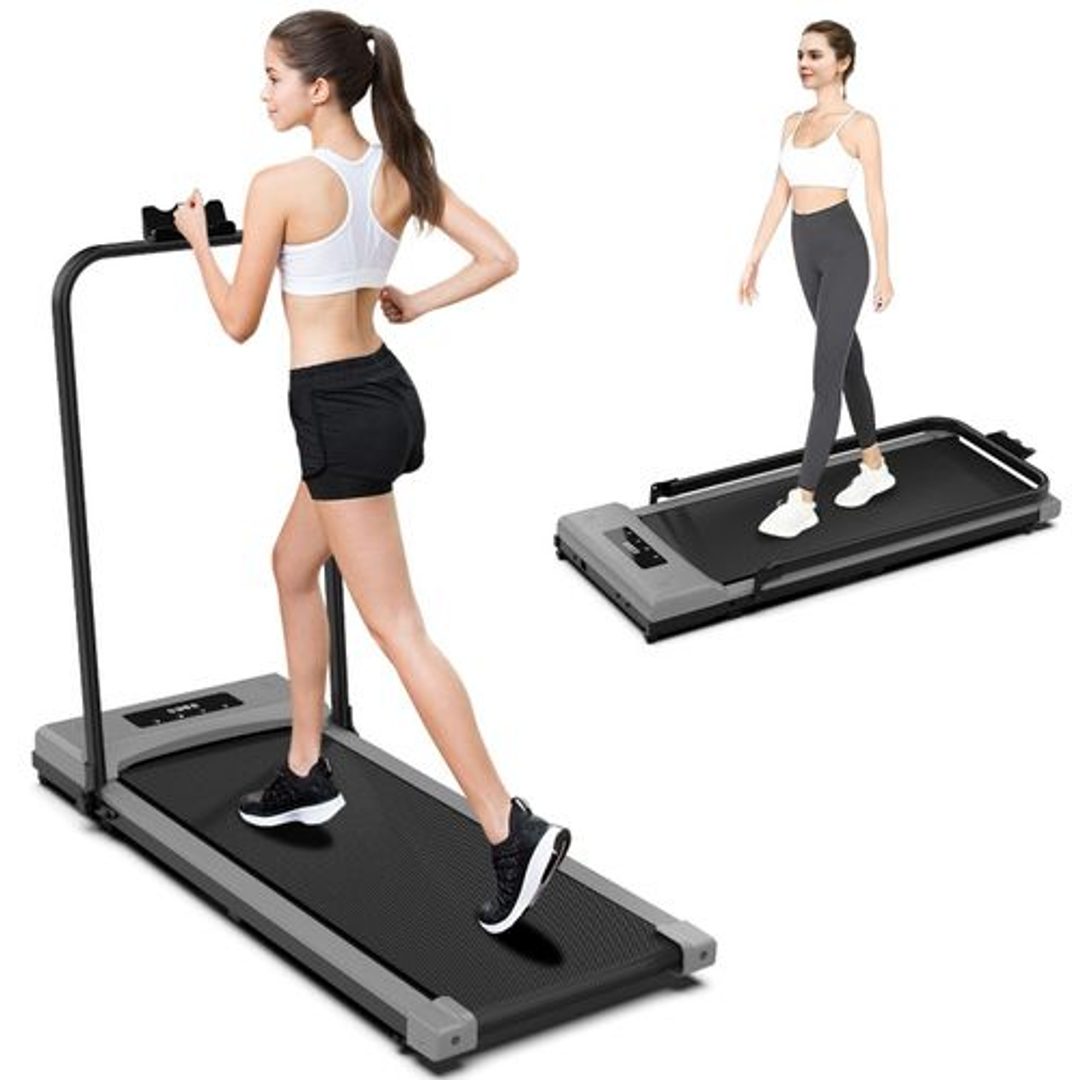
A walking pad's belt is shorter than a full treadmill's, so you have less room to drift. Stay in the middle of the belt and keep the handrail up if you feel unsteady. Our 2-in-1 model has a handrail that lifts up for running at up to 14 km/h, which gives you something to hold at higher speeds.
Who should check with a doctor first
Walking is one of the safest forms of exercise. Even so, speak to your doctor before you start if you:
- have a heart condition, chest pain on exertion or high blood pressure that is not under control
- get dizzy, have balance problems or have fallen recently
- are recovering from surgery or an injury
- are pregnant and new to exercise
- have diabetes with reduced feeling in your feet
Older adults can usually use a walking pad safely with a slow start. Our guide to the walking pad for seniors covers speeds, handrail use and how to begin.
10 safety rules for using a walking pad at home
- Start the belt while standing on the side rails, at the lowest speed, then step on.
- Know where the stop button is on the remote and the panel before you walk.
- Hold the handrail when running, or whenever you feel unsteady.
- Walk in the middle of the belt and look ahead, not down at your feet.
- Wear closed shoes with grip. Socks are slippery, and bare feet can get friction burns at speed.
- Slow down to type. Keep the speed at 1 to 3 km/h while you work at a desk.
- Plug straight into a wall socket, or a heavy-duty extension cable. Never share a multi-plug with an iron, heater or kettle.
- Use a flat, dry floor, with a rubber mat underneath on tiles or upper floors.
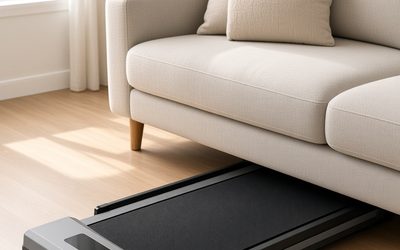
- Fold it away and unplug it after use, and keep the remote away from young children.
- Look after the belt. Lubricate it every few months and stop at once if you smell burning or the belt slips. Our lubrication guide shows how.
Is it safe to use a walking pad every day?
Yes. The World Health Organization recommends at least 150 to 300 minutes of moderate activity a week for adults, and daily walking is one of the easiest ways to reach it. Start with 10 to 15 minutes a day for the first week and build up. Our beginner's guide has a simple two-week plan.
Is it safe for children and pets in the house?
Yes, with sensible storage. Fold it away after every session, keep young children and pets out of the room while it runs, and never leave it running unattended. Our guide to walking pad safety with children and pets covers house rules, and we have a separate guide on whether dogs can use a walking pad.
Frequently asked questions
Are walking pads safe for seniors? Yes, for most older adults who can walk unaided. Start at 1 to 2 km/h, hold the handrail, and have someone nearby for the first few sessions. Anyone with a heart, balance or mobility condition should ask a doctor first.
Can a walking pad cause injury? Injuries are rare and usually come from avoidable situations: getting on a fast belt, distraction, unsuitable footwear or doing too much too soon. Following the safety rules above removes most of the risk.
Is it safe to walk on a walking pad barefoot? A slow walk barefoot is possible, but shoes are safer. They give better grip and protect your feet from friction burns, especially at higher speeds.
Should I unplug my walking pad after use? Yes. Unplugging it stops anyone starting it by accident with the remote, and protects it from power surges.
Are walking pads safe in an upstairs apartment? Yes. A walking pad and its user weigh far less than a sofa full of people. The main issue upstairs is noise, which a rubber mat and walking rather than running at night will reduce. See our guide to the walking pad for apartments.
See our foldable walking pad treadmill with a lift-up handrail, KSh 24,800.
Foldable Walking Pad Treadmill, KSh 24,800
Walks at 1 to 6 km/h under a desk and runs up to 14 km/h with the handrail up. Folds flat, no assembly. Delivered in 3 hours in Nairobi and to any town in Kenya.